


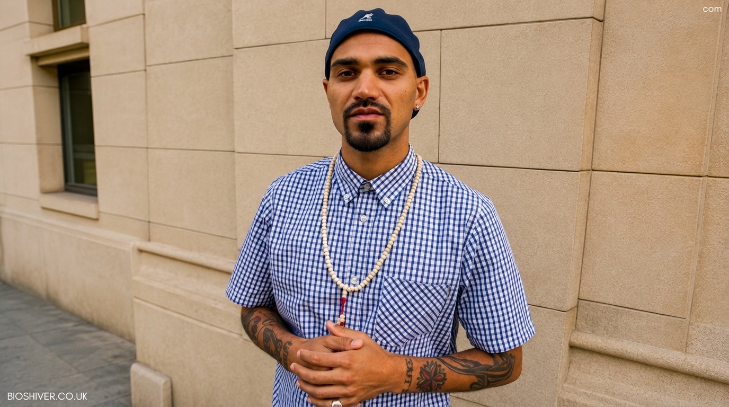
Introduction
Alex Hanscombe is a name tied to one of the most talked-about true crime cases in modern British history, yet his story stretches far beyond the tragedy that made him famous as a child. He is the son of Rachel Nickell, the young mother murdered on Wimbledon Common in London in 1992, an event that shocked the nation and remained unresolved for almost two decades. What draws so many people to his story today is not only the crime itself but the decades of quiet rebuilding that followed, as a toddler thrust into a nationwide investigation grew into a man willing to speak openly about grief, identity and healing. This article looks at his early life, the aftermath of the murder, his bond with his father André Hanscombe, and how hypnotherapy, yoga, music and honest storytelling have shaped the life he leads today.
Who Is Alex Hanscombe?
Alex Hanscombe was born in London in the late 1980s to Rachel Nickell and André Hanscombe, a semi-professional tennis player who later worked as a motorcycle courier. Those who knew the family have described a simple, close-knit household in south London, with Rachel staying home to care for Alex while André worked, and the family dog, Molly, completing their small world. It was an ordinary life, far removed from the public spectacle that would soon follow.
Everything changed in July 1992, just three weeks before Alex turned three. A morning walk on Wimbledon Common with his mother ended in tragedy when Rachel Nickell was attacked and killed in broad daylight, with Alex the only witness present. That single morning reshaped the rest of his childhood and turned his name into a permanent part of British criminal history, long before he was old enough to understand why.
The Wimbledon Common Tragedy
The murder of Rachel Nickell became one of the most closely followed criminal cases in modern British history, partly because of the brutality of the attack and partly because it happened in a public park in broad daylight. Rachel, then just twenty-three, was stabbed multiple times while her young son stood nearby, and the shock of a mother being killed in front of her toddler fuelled relentless media coverage for years afterward. Because Alex had been present, he became central to an investigation that was, at the time, unprecedented in scale and deeply flawed in execution.
Police interviews with a child so young raised serious questions that are still discussed by criminologists and child psychologists today. Alex has spoken about the strain of being interviewed repeatedly by police and a child psychologist, describing how being guided back to the memory of that day over and over left a lasting mark on him. The investigation initially targeted the wrong man, and it would take years of forensic work before Robert Napper was correctly linked to the killing, finally bringing some resolution to a case that had haunted the country for so long.
Growing Up Under Media Scrutiny
For much of his childhood, Alex Hanscombe lived under a level of public attention rarely experienced by someone so young. British newspapers followed the case for years, and Alex has since described feeling like he was, in his own words, one of the most recognised children in the country at the time. That kind of exposure meant his grief was never entirely private, and his early identity became tangled with a crime he had no real way of processing as a small child.
The pressure eventually became unbearable enough that his father made the decision to leave the country altogether. This wasn’t simply about escaping cameras and headlines; it was about giving a traumatised child a chance at something resembling an ordinary childhood, away from a media storm that showed no sign of slowing down even years after the murder.
Life in Exile Abroad
André Hanscombe relocated with his son to continental Europe, seeking distance from the relentless press coverage that had followed them since 1992. This period of exile became a defining feature of Alex’s upbringing, shaping his sense of home, belonging and safety for years afterward. Rather than growing up in familiar surroundings with extended family nearby, Alex spent much of his youth adapting to new countries, new schools and new languages.
During this period, André created a set of children’s stories called “The Adventures of Little Louis,” written specifically to comfort and distract Alex as they settled into unfamiliar surroundings abroad. This small, personal detail says a great deal about how father and son tried to build a sense of normal life out of extraordinary circumstances, using storytelling as a coping tool long before Alex would find his own methods of healing as an adult.
Relationship With His Father André Hanscombe
Alex’s relationship with his father has always been central to how the public understands his story. André was, understandably, both protector and fellow griever, trying to raise a young son while carrying his own unresolved trauma from losing his partner in such violent circumstances. Alex has been candid that their bond was not always smooth, particularly during his teenage years, when frustration and unspoken resentment often surfaced between them.
Part of that tension came from a difficult truth Alex had to sit with as he grew older: the idea that a parent, however loving, cannot always protect a child from harm. He has spoken about how that realisation affected his trust, not just in his father, but in the broader idea of safety itself. Over time, and especially as adults, father and son have worked through much of that history together, including collaborating on shared writing projects that revisit their past from a place of greater understanding and, eventually, forgiveness.
Healing Through Hypnotherapy, Yoga and Music
As an adult, Alex Hanscombe built a life that reflects a deliberate search for calm after decades shaped by chaos and grief. He trained as a certified hypnotherapist, a path that speaks directly to his interest in how the mind processes and releases old trauma rather than simply suppressing it. He has also spent years as a musician, using creative expression as another outlet for emotions that have always been difficult to put into ordinary words.
Travel and spiritual practice have played an equally significant role in his recovery. Alex has spent extended periods studying yoga in India, training under the respected teacher R. Sharath, and has described this discipline as a genuinely grounding force in his life. These pursuits are not simply hobbies picked up in passing; for Alex, they function as practical tools for managing anxiety and slowly reclaiming a sense of control that was taken from him as a small child on Wimbledon Common.
Letting Go: The Memoir
Alex’s memoir, “Letting Go: A True Story of Murder, Loss and Survival,” gives readers his own account of the events that shaped his life, written in his own words rather than filtered through decades of press coverage. The book covers the morning of the attack, the investigation that followed, and the long, often painful process of growing up as a symbol of a case rather than simply as a grieving child trying to make sense of the world.
What sets the memoir apart from typical true crime writing is its focus on the aftermath rather than the crime itself. Readers looking for procedural detail instead find a coming-of-age story centred on identity, anger and the slow work of rebuilding trust in the world around him. The book has been discussed on British television programmes including This Morning, BBC Breakfast and Newsnight, and has been covered by major outlets such as The Sunday Times and the Mail on Sunday, cementing Alex’s voice as a central part of how this story is now understood.
Documentaries and Dramas Revisiting the Case
In recent years, renewed interest in the Rachel Nickell case has brought Alex back into public conversation through screen adaptations. A Netflix documentary revisited the murder using archival footage and interviews with forensic experts, offering a factual account of how the flawed investigation eventually led to justice. Alex and André have also served as consultants on a separate dramatised series, lending their firsthand perspective to a fictionalised retelling that focuses less on the crime and more on how the family coped in the years that followed.
These projects matter because they shift some of the narrative control back to Alex and his father, allowing them a say in how their story is told after decades of coverage they had little influence over. Rather than revisiting the crime purely for shock value, both projects lean into the emotional aftermath, echoing much of what Alex had already shared years earlier in his own writing.
Conclusion
Alex Hanscombe’s story resonates with so many people not because of the crime that shaped his early life, but because of the honesty with which he has approached its aftermath. Now settled in Barcelona and continuing to work alongside his father on further writing projects, he has never claimed that healing was simple or instant, and his openness about anger, mistrust and the slow rebuilding of his relationship with André offers a far more realistic picture of trauma recovery than most public narratives allow. Through hypnotherapy, yoga, music and honest storytelling, Alex Hanscombe has shown that survival is rarely about forgetting what happened. It is about finding practical, sustainable ways to live alongside it, and in doing so, he has turned one of Britain’s darkest true crime cases into a genuinely hopeful story of resilience.
